We visited my family last fall, and while it was a good trip overall, there was one incident that really upset me.
We were heading downtown, so we drove to the train station. We had to take two cars because my parents had sold their minivan, but my parents drove both cars. (I don't know why that's significant; it just made me feel that little bit more powerless not to have control over my own transportation.)
Mikko does this thing on walks where he likes to bring random toys and other goodies, swearing up and down that, yes,
he will carry them … and within minutes, guess what happens. He's slipping one thing into our pocket, suggesting another might go better into our backpack, or just blissfully and shamelessly asking us to please hold all his stuff so he can run ahead.
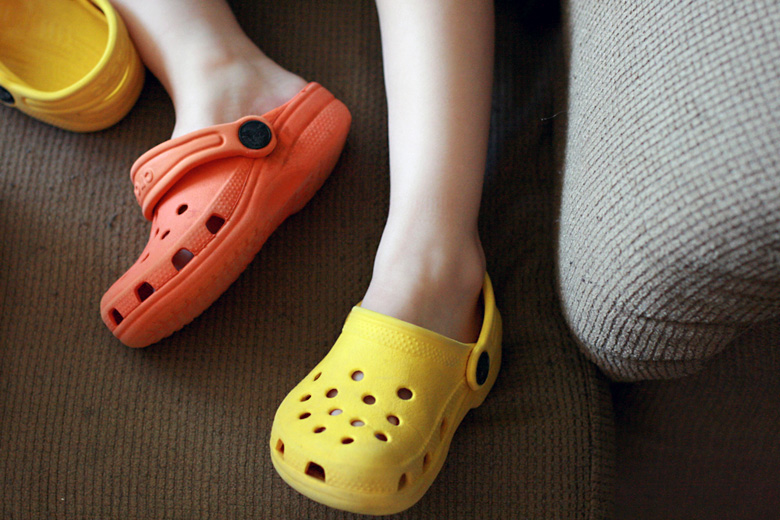
Today it was shoes. He emerged from Nana's backseat with one pair of Crocs on his feet, and another pair on his hands. This is actually true.
I was feeling short-tempered. "One pair of shoes," I ordered. "Please put the other shoes back into the car. We have to catch the train."
My mom was watching this and chimed in. "One pair of shoes," she echoed. "Your uncle is waiting for us." We were meeting my little brother downtown, though the timing was flexible.
This is one in a series of guest posts by other bloggers. Read to the end for a longer biographical note on today's guest blogger, Teresa Graham Brett of Parenting for Social Change. Teresa has offered a penetrating and incisive look at how our upbringing affects our ability to connect with our own children and treat them with respect.
Some links in this post are affiliate links that support the work of this site. Thank you!
 Guest post by Teresa Graham Brett of Parenting for Social Change
In her book,
All About Love: New Visions, bell hooks wrote this paragraph that has stayed with me for some time. I've written about it before, but for some reason I was drawn back to want to write about it again.
The first time I wrote something, I merely touched the surface of my feelings and the way it challenged me. This time, I finally got to the core of some truth, even if it took me a while to get there.
She writes:
An overwhelming majority of us come from dysfunctional families in which we were taught we were not okay, where we were shamed, verbally and/or physically abused, and emotionally neglected even as we were also taught to believe that we were loved. For most folks it is just too threatening to embrace a definition of love that would no longer enable us to see love as present in our families. Too many of us cling to a notion of love that either makes abuse acceptable or at least makes it seem that whatever happened was not that bad. ~bell hooks
I've read this portion of the book many, many times.
And I struggle even now with it.
Even as I wrote this, I kept typing and deleting as I desperately tried to find the words to express my thoughts and feelings, thoughts and feelings that need to come to the surface.
I took a break from trying to write and washed some dishes. I cooked a bit and noticed the ways I was feeling annoyed and short-tempered with my family. It was still sitting with me.
But then the truth hit me in a flash. It brings tears to my eyes as I write it.
The truth is I know very little about loving children.
And here's why...
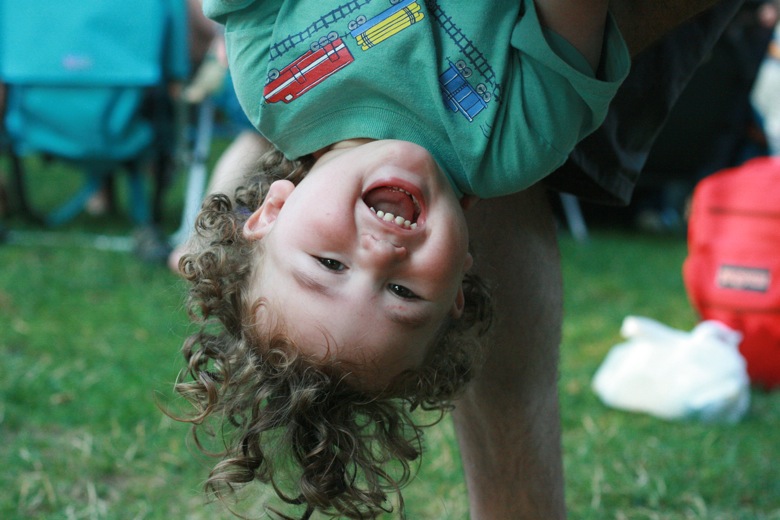
Play is essential for our children — it is their language. And
rough play serves a purpose in releasing energy, reconnecting with caregivers, testing limits both physical and psychological, acting out scary scenarios in a safe way, and seizing some mastery in a world that frequently makes children feel out of control.
But what if you as the parent are not a roughhouser? What if physical and aggressive play turns you off? What if you worry that rough play will make one or more participants scared or that the roughhousing will go too far and turn into crying or injuries (perhaps from experience)?
Then
what you need is some gentle rough play — that is, play that is still physical and active but feels manageable to you, with limits you're able to set and maintain.
In the month of April and into May, a group of intrepid poets and I explored parenting through poetry. It was a glorious, inspirational time, and I was so pleased to share the journey with these writers:
Welcome to the Sunday Surf, a tour of the
best blogposts I've read throughout the week.
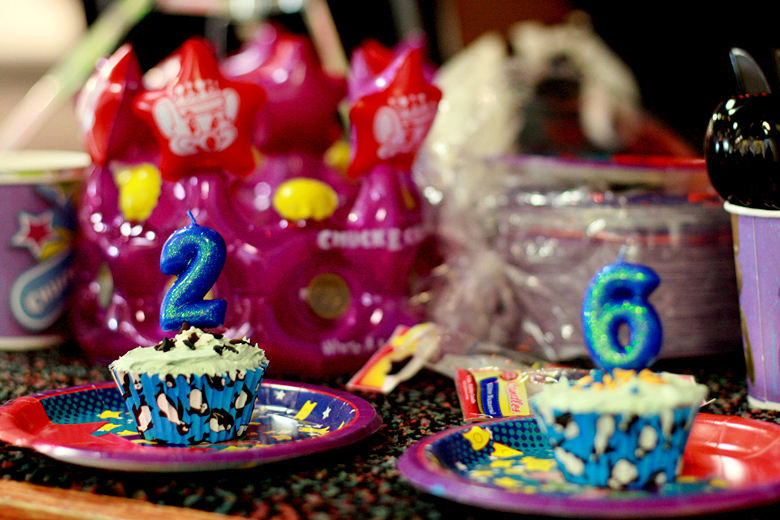
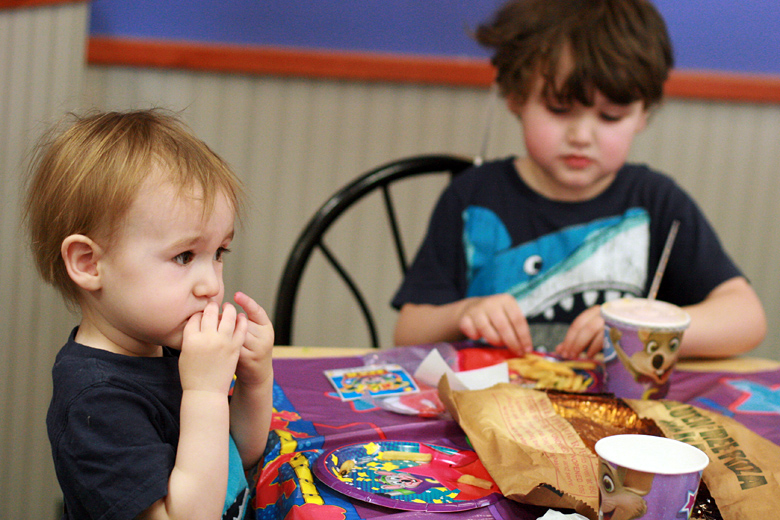
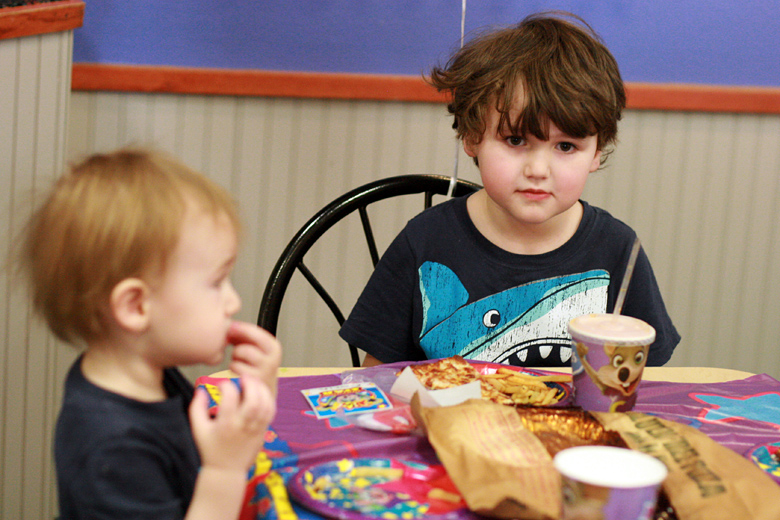
The birthday boys at their Chuck E. Cheese party:
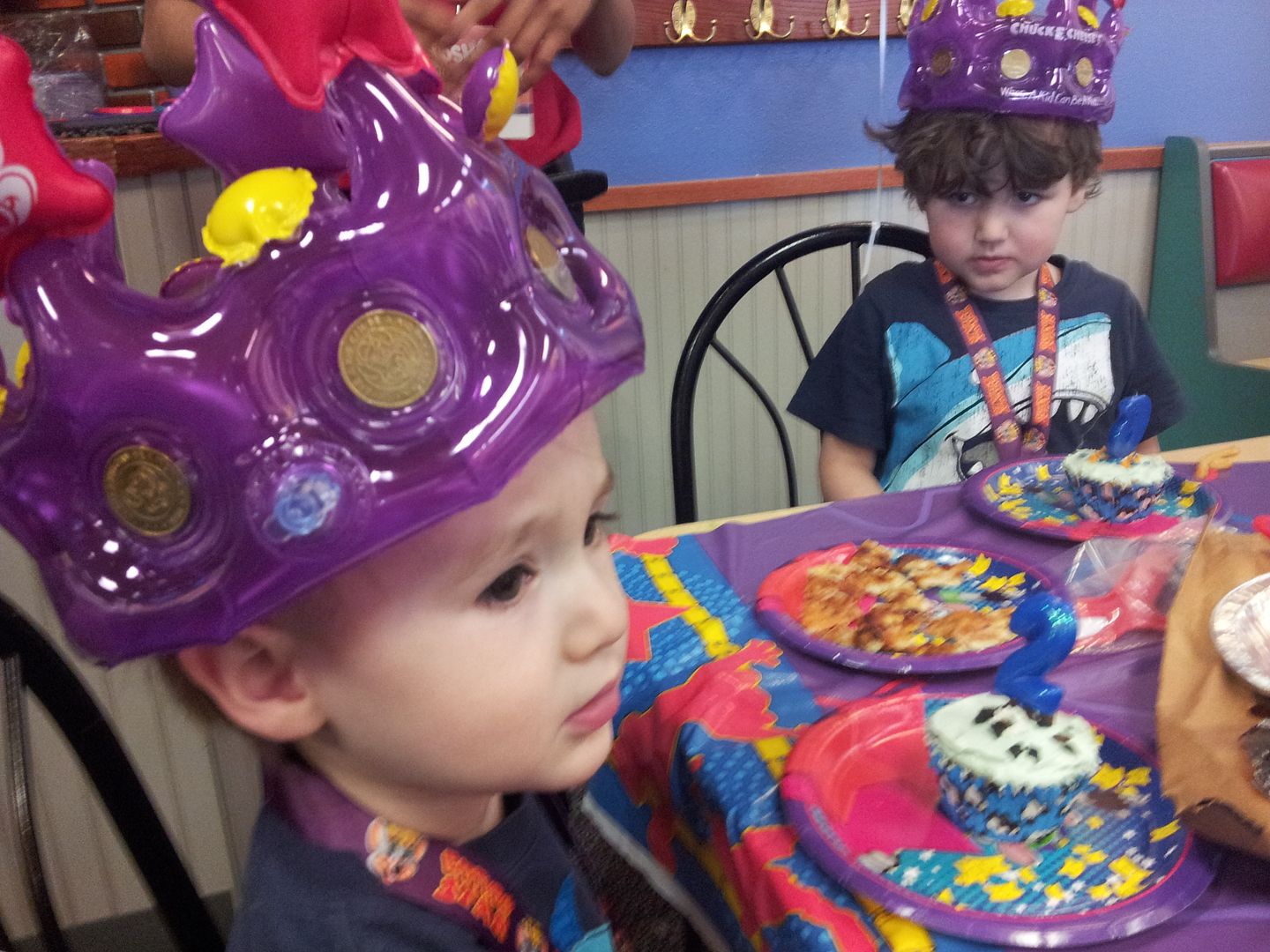 |
| "Uneasy lies the head that wears a crown." |
I swear they actually did have an awesome time, photo evidence notwithstanding! Mikko told me later it was the best day of his life, and Alrik's still chattering on about tokens and tickets and cake-cake.
Good links to share!
On the challenge, joys, and ambivalence of tandem breastfeeding.
Most times when you are having a hard time and you share your experience you get a supportive response. In my experience people are generally encouraging when I’m going through difficult times.
It’ll be okay. Keep trying. It will be worth it in the long run. You’ll get through this. One day at a time.
With tandem nursing or extended breastfeeding the response is different.
The very supportive people say, I don’t know how you do it, I couldn’t.
Everyone else says, Why don’t you quit? Cut her off. She’s had enough. If she’s old enough to ask, she’s too old to be nursing. If she’s potty trained she shouldn’t be nursing anymore. She doesn’t need it anymore. She needs real food.
I can’t think of any other challenge I’ve had in my life where, when I seek out support or need to vent about how difficult it is, people suggest that I quit.
I love the city not for what it offers but for what it is: for its people, its perspectives, its progress.




 I'm Lauren Wayne, writer and natural parent. I embrace attached parenting with an emphasis toward green living.


