In honor of Father's Day, here is a collection of 8 children's books that portray gentle fathers for dads to read with their kids.
Oh, Oh, Baby Boy! by Janine Macbeth — From birth into his father's arms through becoming a father himself, a boy experiences the nurturing and hands-on care that will guide him his whole life.
Guess How Much I Love You, by Sam McBratney & Anita Jeram — Little Nutbrown Hare learns he can never outlove Big Nutbrown Hare, who loves him to the moon … and back.
Daddy Hugs, by Karen Katz — Count along with the hugs daddies can give, from "I gotcha now" hide-and-seek hugs to "Don't be afraid of the dark" hugs.
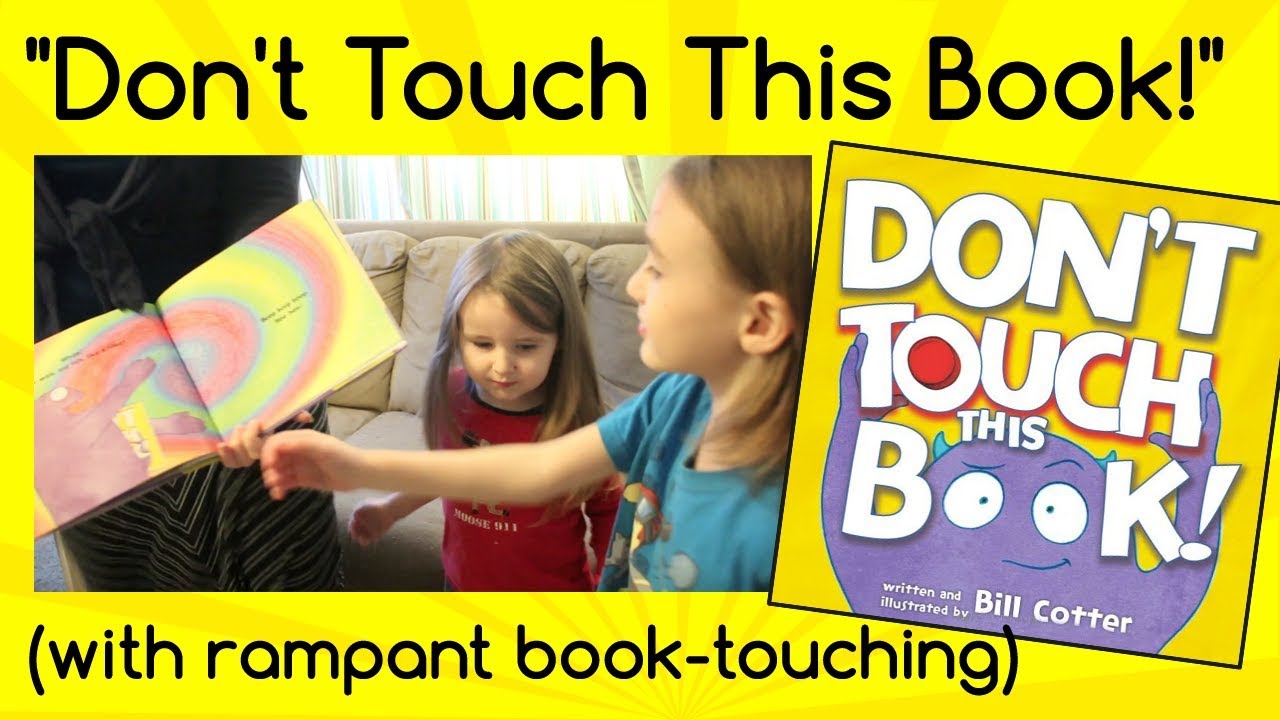
Here's video proof that my kids can't obey ONE SIMPLE DIRECTION. Don't Touch This Book. Couldn't be easier, right? See what incredible things happen when Karsten and Alrik can't resist.
This book by Bill Cotter, along with the others in his canon, is hilarious and interactive read-aloud fun for kids. Highly recommended!
It's time for my annual roundup of coupons and deals sent to me by my affiliate partners. These are companies I support and recommend and whose savings I'd like to pass along to you for your holiday shopping! If you shop through my links, it costs you nothing extra and I get a little reward from the company to support my blogging. Thank you!
Truth in the Tinsel: Advent activity ebook for families
If your family practices the Christian faith and is looking for a kid-friendly guided Advent resource for December, try out Truth in the Tinsel!
This is "an Advent experience for little hands," because it offers a faith-based activity and Bible reading each day to reinforce the reason for the season and lead children into a celebration of Christmas and Jesus' birth.
Blast from the past! Caps for Sale, by Esphyr Slobodkina, has been a favorite of both our older kids so far. I suspect our third will have a go at it soon enough as well!
We're having piratey fun reading this book Little Kunoichi: The Ninja Girl, by Sanae Ishida, a children's picture book about a ninja girl and her samurai friend who learn the value of shugyo (practice & discipline).
It's got delightful watercolor illustrations with whimsical details. You and your kids will love the silliness throughout, and the message is one that I think we all need to hear: that being good at something almost always takes practice, practice, practice.
I've enrolled all my parenting ebooks into a special promotion at Amazon called Kindle Countdown Deals. Starting today, each one is available starting at only $0.99 for a limited time. You can see the time left on the countdown timer. For the next week, each will gradually rise back to list price, so grab them at a discounted price while you can!
True to its name, each book is just a buck — so you get 10 incredible ebooks on natural mothering for just $10. My book is normally just about that much on its own, and buying all 10 separately would cost $68, so this is a great opportunity to add to your parenting library for pennies. You get:
True to its name, each book is just a buck — so you get 10 incredible ebooks on natural mothering for just $10. My book is normally just about that much on its own, and buying all 10 separately would cost $68, so this is a great opportunity to add to your parenting library for pennies.
The sale is on for just 72 hours, so be sure to check it out now through my link: Motherhood Bundle sale.
We're having fairly mild weather here in the Northwest, but winter is on my mind since my parents have had feet of snow dumped on them in the Northeast. Here are a few of our favorite cold-weather children's picture books to enjoy, whether you're snowed in or not:
This is now a favorite for Alrik and me. A young boy "helps" his mom get the house ready while waiting impatiently for an impending snowfall. His mom gives him tasks to do that invariably make him think about snow (the sprinkling flour from baking, the cool white sheets on the bed), and he winds up making a mess each time before racing outside to check once again if the weather is cooperating with his wishes. The mother's frustrated faces are enjoyable enough as catharsis for the adult story-reader — who of us can't empathize with how much our children's help actually gives us more work to do? But I love the overall narrative of a child pitching in, however imperfectly, with the housework. The gentle relationship between mother and son, the boy's vivid imagination, and the charming watercolor illustrations are inspiring. The story culminates in a wild naptime adventure that leads into the actual snowstorm, the dad's return from work, and snug family togetherness for the night.
One element I especially appreciate about this book is that it shows a family of color. It's all too common to find non-white folks in U.S. children's books relegated to the background or playing minor characters; if they are the main characters, it's often a book explicitly about race, which is fine, too — but it's nice to see a regular story with a regular family that just happens not to be white!
I wrote this post in its entirety in November 2012 but hesitated to publish it, I suppose because the subject matter is so grim. But I think it's a worthwhile topic to consider, so here it is now, one further baby in for me!
I'd like to share some more of my notes and thoughts from reading Mother Nature: Maternal Instincts and How They Shape the Human Species, by Sarah Blaffer Hrdy, a weighty tome I picked up in the immediate postpartum period after Alrik's birth and dutifully and interestedly crawled my way through — all 541 densely printed pages. I found it fascinating, and disturbing — informative and resonant (Hrdy is an anthropologist, so she knows humans) and yet frequently distressing (humans don't always play nice, even — especially — with babies).
Today's article is about the crowded foundling homes of Europe, which were most used in the 1400s to 1800s. I give you fair warning now to bow out if talking about abandoned children and high infant mortality rates is triggering or overly distressing for you. (I wouldn't blame you one bit. I sometimes wonder why I read Mother Nature when I had a newborn, but I actually think the discussion of maternal ambivalence dovetails perfectly with the sleep-deprivation period.)
A ring sling is a highly useful carrier since it’s easy to learn to use (just pop your baby in and tighten the fabric through the rings) and can be used from newborn days (in front carries) up through toddler years (in a hip carry). Plus, it’s a poppable carrier, easy to let children in and out of without a lot of bother.
A ring sling is a length of woven cloth that loops over the wearer's shoulder and is adjusted by the overlapping rings worn near the shoulder, with the baby sitting in the pocket created by the fabric. Ring slings work for any caregiver because they can be sized big or small and made plain or fancy, with different colors, patterns, and fabric choices — often cotton but also blends, linen, very lightweight mesh or solar-protective fabrics for water and summer use, and brocade and silk for dressier occasions.
Using a ring sling can seem daunting at first, but with a little practice and guidance, you’ll soon find it becomes second nature. I'll share some pictures here my husband took of my 2-year-old and me showing how it's done. Front carries work well with any age baby or toddler, and the hip carry is better attempted once a baby has good head and neck support.
I’d like to remind you of a few safety pointers to keep in mind when learning any new carry or carrier:
Keep your baby supported with your arms until you’re sure the carrier is secure.
If your baby or you are not feeling well, try again later.
Enlist another trusted adult. Ask the other adult to keep hands on the baby, or to help you secure the carrier, and be clear about who’s doing what.
Use a mirror. If you’re out, any reflective surface (building windows, car windows) will help.
Start low. Sit on the floor as you begin a wrap so you both can have less fear of falling. Later on, try starting from a sofa or bed or the seat or trunk of a car.
Ensure airways are clear and babies don't slip deeply into the pocket of fabric.
Keep young babies tummy to tummy and upright against you. Support unstable heads with fabric behind the head.
If you need help, request it! If you want someone to confirm that your baby’s in safely, ask away. If you feel uncomfortable with certain carries, that’s totally fine — find what works for you and your little one, and enjoy your own brand of babywearing!
Front Carry in a Ring Sling
Carrying a baby tummy to tummy in a ring sling is perfect for snuggly newborn days on up. It’s most comfortable with lighter loads and makes for convenient breastfeeding.
Loosen the ring sling and place over one arm and then over your head.
We've got a FLASH SALE — today only! — of 10% off Mindful Nurturing's Essential Parenting Collection or any of the topical bundles on Pregnancy and Birth, Parenting the Early Years, Child Development, Mindful Guidance, and Resources for Parents.
Use code MONDAY10 for 10% off your purchase
March 10 only!
The full collection is $44.97 today only, and each mini-bundle is $17.97, only through midnight, so hurry!
Right now, I'm going to do a mini-review of several resources that have meant something to me. Keep in mind that this full collection is worth $750, which means each resource has an average value of $21. You don't have to crave many of the books to make the whole bundle or one of the topical bundles well worth your purchase!
I'm Lauren Wayne, writer and natural parent. I embrace attached parenting with an emphasis toward green living.
Riding the rails with my husband, Crackerdog Sam, and our hobo kids, Mikko Lint Picker (born June 2007), Alrik Irontrousers (born May 2011), and Karsten (born October 2014). Trying every day to parent intentionally and with grace.







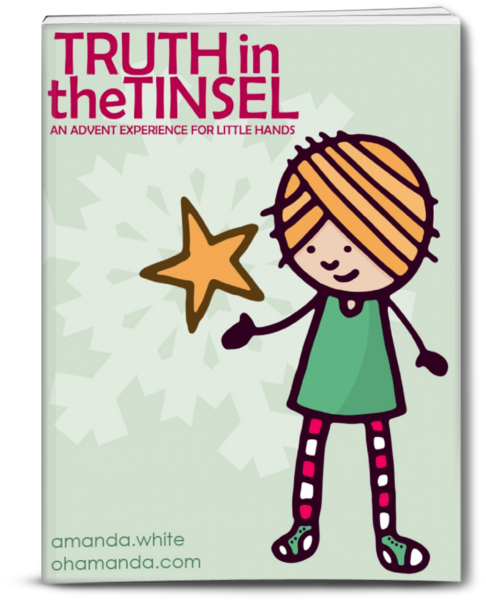 If your family practices the Christian faith and is looking for a kid-friendly guided Advent resource for December, try out Truth in the Tinsel!



 We're having piratey fun reading this book Little Kunoichi: The Ninja Girl, by Sanae Ishida, a children's picture book about a ninja girl and her samurai friend who learn the value of shugyo (practice & discipline).
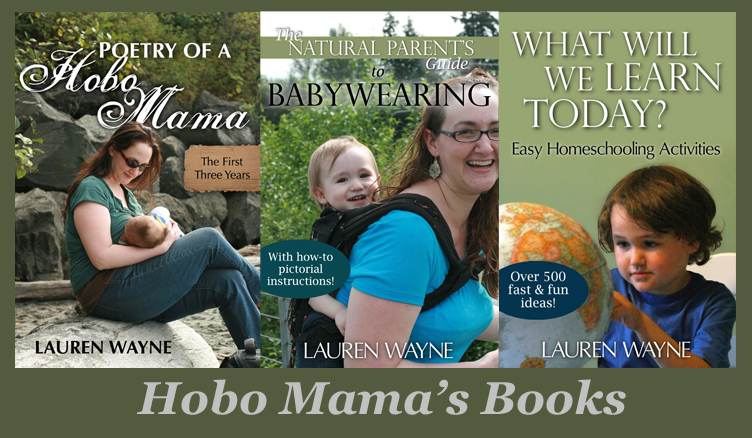
 Witness the admirably entertaining Pet's Tails touch-and-feel book by Jellycat, written by Anne Wilkinson. Every single pet on every page is a boy:


 I'd like to share some more of my notes and thoughts from reading Mother Nature: Maternal Instincts and How They Shape the Human Species,
 by Sarah Blaffer Hrdy, a weighty tome I picked up in the immediate postpartum period after Alrik's birth and dutifully and interestedly crawled my way through — all 541 densely printed pages. I found it fascinating, and disturbing — informative and resonant (Hrdy is an anthropologist, so she knows humans) and yet frequently distressing (humans don't always play nice, even — especially — with babies).
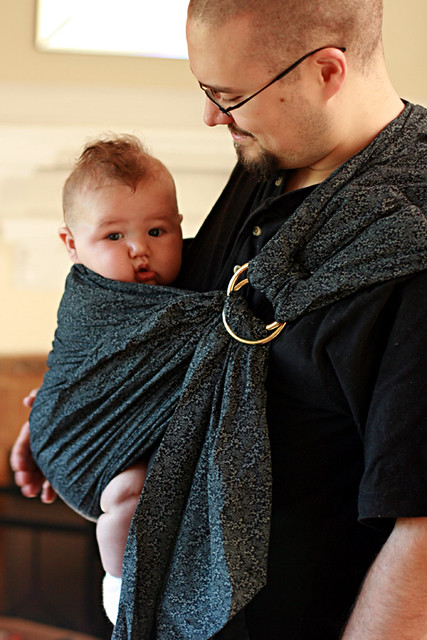 A ring sling is a highly useful carrier since it’s easy to learn to use (just pop your baby in and tighten the fabric through the rings) and can be used from newborn days (in front carries) up through toddler years (in a hip carry). Plus, it’s a poppable carrier, easy to let children in and out of without a lot of bother.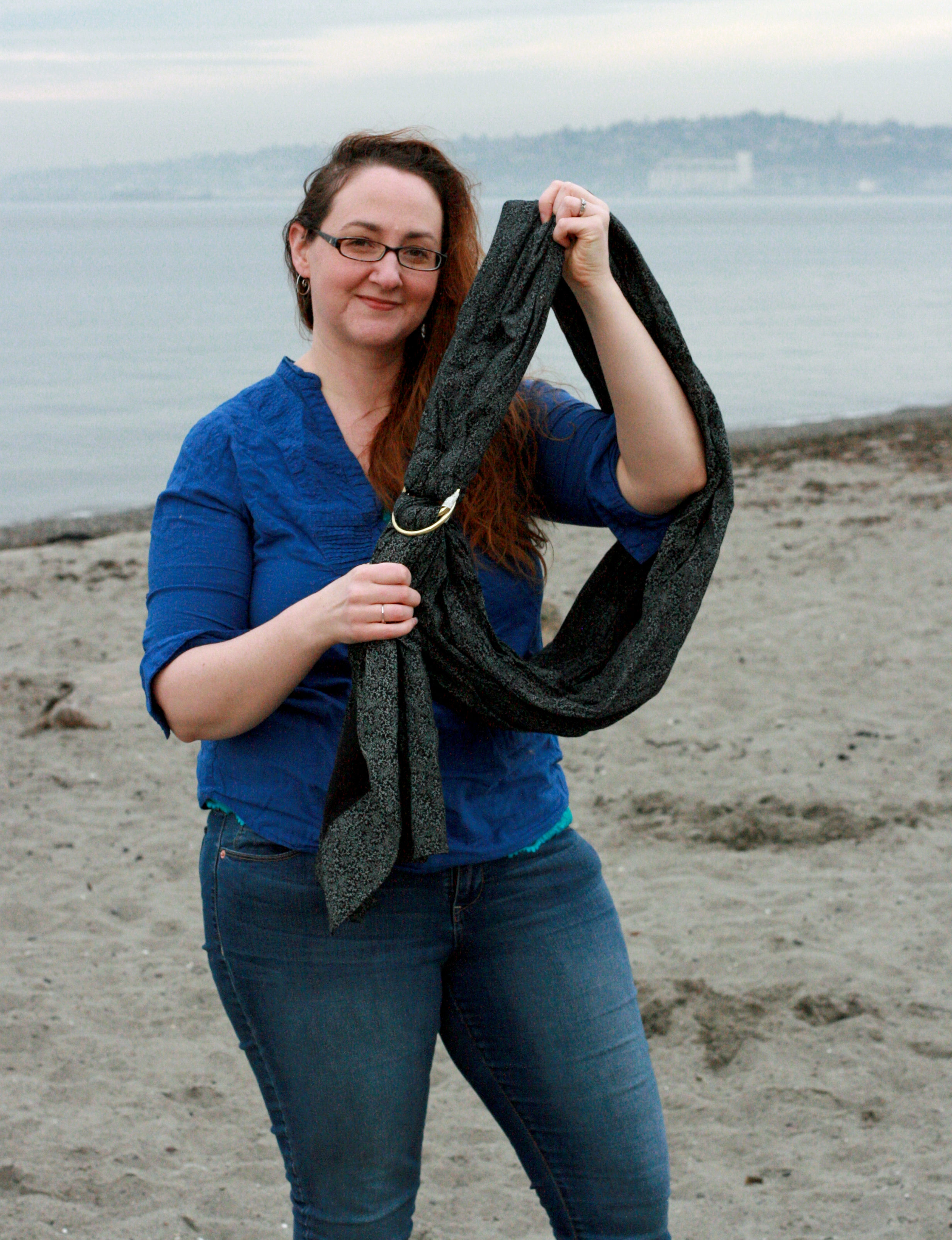


 I'm Lauren Wayne, writer and natural parent. I embrace attached parenting with an emphasis toward green living.


