
Stephen Colbert on the VotersChoose project on DonorsChoose.org:
"Now, Obama supporters are in the lead, Hillary’s in second, and no donations so far for the Mike Gravel Hobo School for Pie-Stealing. He'll come up in the end.”
If you build it, they will come.
Monday, March 31, 2008


Tuesday, March 25, 2008
To add to my unauthorized breastfeeding-humor post, I just want to share Mikko's newest nursing trick. My nips are sensitive, and I'd always batted his hands away from touching before, fearing the worst (trust me, he's terror on eye sockets and windpipes and he's drawn blood more than once -- more than twenty times), but one night I was too sleepy and let my defenses down. He reached out one chubby little hand and centered it exactly over the nipple. Then he drew it toward his mouth and -- pop! -- in it went, and the hand came back out, neat as you please. It takes longer to write it than to see it in action, and within seconds he was sucking away.
It cracked me up. What an inelegant yet efficient way to get what he wanted into his mouth. What beautiful, insane baby logic. Adults would put their hands on the sides of what they wanted to bring to their mouth: We don't grab the tines of the fork with our palm; we use the handle. We don't wrap our fingers around the lip of the cup where our lips would go; we wrap our hand around the side. But, no, Mikko does what every baby does -- goes right for the prize. I want that, so that's what I'll grab, thank you very much.
I also wanted, per Sam's suggestion, to update my post on the video of Citizens Against Breastfeeding. Sam said I didn't emphasize enough how ludicrous Alan Abel's hoaxes are, so that his campaign against breastfeeding can be seen in the light of his other inanities.
This Slate article does a good job of describing Abel's history of hoaxes, from requiring pants for indecently naked farm animals ("A nude horse is a rude horse") to euthanasia cruises offering suicides at sea by tilting the despondent into the briny deep.
The point of Abel's work is that the American public, and particularly the American media, is gullible, and will accept any viewpoint as valid, even one that's bizarre and offputting. Even Walter Cronkite fell for Abel's shtick and covered his campaign to hide animal privates.
"SINA [The Society for Indecency to Naked Animals] worked because it seemed plausible to a substantial number of Americans.... As it happened, some Americans actually did agree with Abel. ...[I]ndependent SINA chapters formed across the country, a SINA float turned up in a parade in the Midwest, and one lady even sent in a check for 40 grand so that SINA could continue God's work. (Abel appreciated the gesture, but says he never cashed the check.)
"With SINA, Abel had found his vocation. He came to regard his hoaxes as performance art, a form of moral commentary, and a way to inject a bit of fun into what he saw as an irritatingly self-serious national scene."
Abel has a knack for picking hot-button topics.
"He's latched on to issues that tend to make people hysterical -- pornography, euthanasia, child welfare, Richard Nixon -- because they're also the issues that make people hopelessly gullible."
Breastfeeding included, of course.
"Abel's keen sense of the zeitgeist remains undiminished today, making hoaxes like his recent crusade against breast-feeding eerily believable. 'I've interviewed hundreds, maybe thousands of breast-feeding mothers,' he tells a couple of radio hosts in the film, 'who after two hours of interrogation have admitted that they had erotic feelings with their babies, which is incestuous. It's a violation of their baby's civil rights, just as we feel circumcision probably is, too.'"
What's scary about this is both that Abel so easily gets airtime to spout his mock-credible claims -- but, even more, that there are plenty of people listening to him and nodding along, agreeing with what he says and passing it along as fact, like email forwards about a Nieman Marcus cookie recipe or the postal service's tax on emails to bolster sagging revenues. Americans tend to receive information unskeptically, and Abel works with that by playing to their worst fears and inhibitions, seen most recently in his spiel as an anti-breastfeeding activist. He rightly perceived that most Americans are made twitchy and nervous by breastfeeding, with a baby grasping what is seen as a sexual object, and Abel exploits those tensions.
As the article puts it, the American public has a "unique knack for getting played for suckers." I just hope that one day the video equating breastfeeding with inappropriate eroticism will seem as patently silly as the pants-for-horses campaign.
Thursday, March 20, 2008
Take two: As I said before, you get a lot of chances to practice breastfeeding.
The other day, Mikko made a big sucking sound, and I joked to him, "You call that a latch? Do it right!" I say such things for my own amusement, of course, and realize I'll have to stop once he's learned how to speak, so I'll enjoy it for now.
It got me thinking, though, that, while it's funny (to me) to yell at a nine-month-old for doing something poorly, he really should be an expert at breastfeeding at this point, and in fact he is. He corrected his latch immediately and got right back on.
I started doing the math, and estimating conservatively at an average of 10 feeds a day, I got the astounding figure of 2,700 nursing sessions since birth.
Wow!
If you do something 2,700 times, you get good at it. Both of us are breastfeeding pros now, in nine (pretty) short months, and of course it didn't take us that full time to become so expert.
I mention this as encouragement to new mothers moving into breastfeeding in a postpartum fog and wondering if it will ever feel natural. You'll get lots of chances to practice. If you "mess up" one try, another will come along in a matter of minutes or hours. You and your baby both are learning, and your opportunities to get it right will come along easily and naturally.
Wednesday, March 19, 2008
This made me laugh.
Note that I guess it would be considered NSFW, but it's really sweet.
Note that I guess it would be considered NSFW, but it's really sweet.
Tuesday, March 18, 2008
I'm a little slow in reporting this, but that's because I've been entertaining my mother-in-law.
On March 3, Stephen noted the famous Colbert bump that "lifted Mike Gravel from homeless to hobo." Maybe he can run for Hobo King.
http://www.thedailyshow.com/video/index.jhtml?videoId=162603&title=colbert-bump
On March 3, Stephen noted the famous Colbert bump that "lifted Mike Gravel from homeless to hobo." Maybe he can run for Hobo King.
http://www.thedailyshow.com/video/index.jhtml?videoId=162603&title=colbert-bump
Saturday, March 8, 2008
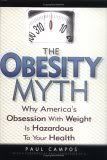

I've been reading a lot recently about the obesity myth (and the book by the same name
by Paul Campos; another good one is Fat Politics by J. Eric Oliver). Some researchers of body-fat issues think our obsession with weight is not only grossly overblown -- but that our very war against obesity is causing health problems.
Similar to the argument I put forth in my post about the unintended consequences of car-seat and cosleeping safety, attacking weight "problems" often promotes anorexic and pro-eating disorder behavior that is undeniably more dangerous than the "excess" weight would have been.
Below are some quotes from the article, which is itself an excerpt from the book
:• The health risks associated with increasing weight are generally small, in comparison to those associated with, for example, being a man, or poor, or African American.
• These risks tend to disappear altogether when factors other than weight are taken into account. For instance, fat active people have half the mortality rate of thin sedentary people, and the same mortality rate as thin active people.
• There is no good evidence that significant long-term weight loss is beneficial to health, and a great deal of evidence that short-term weight loss followed by weight regain (the pattern followed by almost all dieters) is medically harmful. Indeed, frequent dieting is perhaps the single best predictor of future weight gain.
Nowhere is our skewed perception of what is an "acceptable" body type put more to the test than with our babies. Babies don't know how to diet; babies don't know how to sculpt their abs or slim their thighs; babies are just whatever shape they are, and there really is a great deal of variation in what shapes are available. And, since they're babies, any of those shapes is ideal. And that just doesn't seem to right to us, in our thinness-obsessed culture, where only a handful of similar body shapes are correct.
The truth is that to be fat in America today means to weigh more than whatever a person's particular social milieu considers appropriate. This means it is perfectly possible - and in a certain twisted sense even 'reasonable' -- for a 130-pound white college student of average height to consider herself 'fat', while a working-class African-American woman who weighs 50 pounds more is not likely to think of herself as 'overweight' (and she, too, will be correct in her self-assessment). In other words, fat in America is a state of mind, rather than some objective fact about our bodies.
Being the mother of a "large" baby, I've gotten my share of comments about how fat a baby he is. But the thing is, he's not fat. He's exactly the right size. There's nothing medically wrong with him, and nothing would be gained in health by helping him lose weight. It sounds ludicrous even to talk about it with regards to a baby. In fact, if he didn't gain weight, his health would be in danger. For instance, underweight babies are set up for many more and more severe health problems than supposedly overweight babies, but despite this, some doctors and hospitals are sounding the alarm about "fat" babies. And since Mikko's breastfed on cue (his body's cues), he's regulating his weight all on his own with no help or hindrance from me. This is mindblowing in our culture of always needing to monitor our caloric intake and feel guilty for enjoying foods, of labeling some foods "good" and some "bad."
I do not argue that there is no relationship between weight and health. I argue, rather, that the health risks associated with higher-than-average weight have been greatly exaggerated, while all sorts of related but far graver risks have been ignored. In particular, poverty, poor nutrition and a culture that makes it easy for Americans to be sedentary are important public health issues in America today.
Certainly, as Mikko moves more and more into the land of solid foods, I want to make sure that I navigate around some of the hangups and issues I have had with food. Mostly, I want to stay out of his way and let him continue to be his own ideal self, with his own ideal body type and size. And I want him to accept and love that body of his.
The rejection of the war on fat is based on a simple principle: that tolerance towards an almost wholly benign form of human diversity is the least we should expect of ourselves, if we wish to lay claim to living in a civilized culture. The war on fat is an outrage to those values that American culture celebrates (often with good reason) as essential features of our nation's character -- of equality, of tolerance, of fairness, and indeed of fundamental decency towards those who are different. And in the end nothing could be easier than to win this war: all we need to do is stop fighting it.
P.S. I'm on vacation this week, so posts might be more sporadic. Cheers!


 I'm Lauren Wayne, writer and natural parent. I embrace attached parenting with an emphasis toward green living.


