I'm not one of those people who goes ga-ga over the newborn stage. I think they're cute, don't get me wrong. But as a former cat sitter, I know that kittens, while adorable balls of fluff, are made purely of fur and energy. They're much more work than reward than an adult cat.
So it's with pleasure and anticipation that I look forward to Mikko's burgeoning skills and growth as a human. Our cat, Mrs. Pim, has not learned more than a couple new tricks since we adopted her, but Mikko is learning new things every day. And it seems like being able to communicate is what makes us uniquely human, so that's what I've been most excitedly watching for.
So, a few weeks ago, we noticed that Mikko was balling up his fist numerous times a day, as if he was waving to himself or perhaps -- our cat? Because he seemed to always wave at the cat. Isn't that cute? we thought.
A few days later, our oh-duh moment: He's SIGNING "cat."
It's a crap version of the sign, but that's my own fault. The ASL sign for cat is pretty much what you'd expect -- drawing whiskers away from the nose, like so. He has been fascinated with the cat from a very young age, so I chose it as one of our first signs. But since he'd always been looking at the cat when I thought to sign it to him, I ended up doing the whiskers somewhere out in the air, or occasionally on Mrs. Pim. So, a scrunching hand it is -- CAT. Our baby's signing.
He also uses his sign for dogs, as we found out when we visited a friend with a boxer mix. He's not particular.
What he is is consistent -- he uses it every single time he sees or hears the kitty.
Now, the next exciting news -- and I had thought the signing update would be enough for one post, but I didn't post soon enough -- is that he has now said his first word as well! And wouldn't you know -- KITTY.
Too bad (poor, beleaguered) Mrs. Pim doesn't love him back.
I recommend baby sign language both for the early-communication possibilities and for the thrill it gives you to have your baby "talking" earlier than you had hoped for. I've particularly heard that boys tend to talk later, so signing can help bridge the gap, and it's also useful for multilingual families to make concepts accessible in more than one language.
As a quick intro, start with just a couple signs, and try to mix up highly motivating and need-based signs. The need-based ones are the ones you'll want your baby to learn for your own convenience: "more," "eat," "milk," "hurt," and so on. But the motivating ones, like "kitty," "light," "truck," or "fan," are for objects or ideas they're interested in and want to talk about -- as we discovered!
You might as well go pure ASL when you can, because American Sign Language is its own language and your child might be able to learn more down the road and communicate with Deaf people. You might need to make up signs for specific concepts in your own family, but be aware that those signs won't be translatable outside of your household. Our other first sign has been "nummies," which I did make up -- it's an adaptation of the ASL for "breastfeeding," but less embarrassing. (Well, look it up and see what I mean -- Variation 2.) I wanted to retain "milk" for when Mikko's drinking cow's milk. My sign is like the sign for "breasts," as in Variation 1 above, but with an "N"-shape hand. Here's hoping I didn't inadvertently pick some real, offensive sign.
Once your baby's caught on to the first couple signs, you can race to keep up!
Here are a few resources to get you started:
Photos of kids signing (helpful for seeing the signs in action on a baby -- as our experience with "cat" shows, kids' signs don't always match exactly the adult versions)
Signing Time! DVDs, with Rachel Coleman(for you to watch, not necessarily your baby under the age of 2 -- yes, they're geared toward kids, but that makes it easy for grown-ups to learn from them!)
We had tried to follow the dictates of Baby-Led Solids, outlined here on this excellent Dutch site (picture above is from there). We haven't been entirely successful (or, perhaps, just not entirely obedient) for a few reasons, although I still believe in the philosophy of baby-led solids.
First of all, you're supposed to give your baby large pieces of food that they can easily hold and then gnaw around. What's in their fist is supposed to be the "handle." Mikko thinks handles are delicious, apparently, because he shoves the whole thing in his mouth, regardless of size. So we've had to resort to pea-sized bites that he can pick up in his pincer grasp, the way conventional baby-feeding advice articles recommend. I know the difference between gagging and choking, and Mikko was one second away from the Heimlich maneuver at least three times, so pea-size it is for now.
Secondly, this kid has a gag reflex the size of Utah and has trouble swallowing anything but breastmilk. This really isn't an issue at this point, although it does get us comments from the relatives. Everyone wants to feed the baby, and everyone wants to see the baby eat. He's over a year old now, so everyone figures he should be scarfing down solids by now. Well, he's not.
Kellymom.com recommends 25 percent solids at 12 months and 75 percent breastmilk, and we're probably close enough to that. People used to formula-fed babies having rice cereal shoved in starting at 6 months (or earlier) are aghast that he still nurses so much.
I think it's amusing that our larger-than-average baby can be accused of under- and overeating at the same time. When he was born, everyone was worried that he must have high glucose (he didn't) and then that he didn't seem hungry enough to breastfeed (they were wrong, because he's a nursing champ). That first week they worried that he was losing too much weight, and then they worried that he was gaining weight so quickly his first six months. Now that he's been holding his (high) weight steady for the past several months, it's solids -- they think it's strange that he's not hungrier for solids than he is, but they worry that his appetite for breastfeeding is too high.
Here's my theory: He's doing what's just right for him and his body.
I have to keep reminding myself and hinting to others that we can't take adult perspectives and hangups about weight and food and apply them to babies. Mikko isn't overweight, and he's not overeating or undereating. There's a distinction between being "larger than average" and being "fat" in the way we as adults understand the latter term. If a healthy baby is allowed to choose his breastfeeding and solids for himself, there's no way he's what we would call fat, even though I'll be the first to admit Mikko's a roly-poly little guy.
But, back to our issues with baby-led solids -- Sam & I were having problems finding solids on our plates that were appropriate and tempting. I'll just say it -- we eat crappy food. I have resolved to change this so that Mikko stands a chance at growing up without the food hangups alluded to above, but that's a post for another day. I wanted to offer him tastes of vegetables and fruits that he could eat, and most of the veggies on our plates were raw, which were hard for him to handle.
Enter purées.
I had sworn I would never feed him baby food, and certainly never buy those costly little jars instead of at the very least making my own mashes.
Oh, well. Safeway Organics were on sale, so I grabbed a variety. Turns out, the kid likes prunes -- who knew!
He still barely makes a dent in the spoonful we give him at mealtimes, but he's enjoying playing with silverware and making a mess, and it gives us a few seconds to wolf down our (pruneless) meal.
It came in really handy a week or so after we bought them when Mikko had surgery and needed pain medicine. Here's where his aversion to solids, drinking from a cup, and swallowing really bit us in the butt, because now he needed pain medicine, and the pharmacist couldn't understand our insistence that a suppository form would be much easier than the sugary flavored syrups they'd sent us off with. Sigh. Red dye everywhere, screaming baby, thrashing limbs -- it seemed like the medicating was worse than the pain.
Until we mixed his meds with purées. Ah, see, they have their purpose! Suddenly, he was eating fruity-tasting, sweetened, slightly reddened prunes, butternut squash, "lentil dinner," applesauce, and, yes, sherbet. Hey, ice cream is the one food where he'll actually let us wield the spoon and feed him!
Despite all this heavy feeding and the tiny little jars, he had eaten maybe a quarter of each when they all went bad. You're supposed to use them up within three days after opening. We pushed that deadline, and how.
So, here's my little tip o' the day, one I'd read before and seen nifty overpriced gadgets to dedicate to the task, but it bears passing on for those like us who appreciate variety in our baby food jars but find that having more than one opened at a time just means that more than one will spoil in short order.
Empty out an ice cube tray. Seriously, just a regular one will do, but wouldn't a rubber ducky one be awesome?
Save the ice cubes for chilling summer drinks. (Hot where you are? It's been stifling here.)
Spoon the contents of the little jars into the ice cube tray.
Freeze it.
Next feeding time, pop out a little frozen cube of mashed bananas or chicken-and-rice surprise, and defrost in the microwave.
If you need the tray back, you can pop them all out and store them in a bag or freezer-proof container. But it also works well to pop just one hideous ice cube at a time.
Add pain medicine to taste. Just joking on that one. Unless you really do need to force feed your baby some meds. In that case, go to town mixing it on in, and hope your baby feels better soon. Ours does.
Welcome to the June Carnival of Breastfeeding: Pumping It Up!
This month we're bringing you posts on the topic of pumping and hand expression. Be sure to check out the links at the end for some great advice and helpful experiences.
*******
When Mikko was a few months old, we were in our naturopathic pediatrician's waiting room, hanging around while she wrapped up some paperwork, when the phone rang. The doctor talked to the person on the line, looked over at us, and said, "Well, I have a new mother right here -- maybe she could help you out."
I whipped my head toward her. Huh? Me?
The woman on the phone was the mother of an adopted little girl, a month or two older than my son, and she was calling around to anyplace she could think of, seeking donors of breastmilk for her baby.
This would be cool if this were the post about what a selfless person I am for unflinchingly giving my time and breastmilk to another woman out of the goodness of my heart, but it's more about how reluctantly I got into the whole gig. I'm worried, since this is a Carnival of Breastfeeding post, that there will be someone less selfish writing about the same topic, but that just means I need to tell this side of the story...
The pediatrician gave me the woman's name and number and asked permission to give her my contact information as well. Somewhat hesitantly, I agreed. And then I proceeded to ignore the mother's calls for awhile, letting them all go to voice mail while I vacillated.
I felt overwhelmed with parenting. I felt like I had just gotten breastfeeding down after a rocky start. I felt like I was just now having a hand free every once in awhile, and pumping would take that away again.
But, finally, I contacted the woman and asked her all my questions about pumping and donating breastmilk, and she asked me all hers.
Her questions for me were along the lines of health and hygiene, to determine if I would make an appropriate donor. When you're dealing with volunteer strangers, you have to be cautious.
I felt a little defensive and nervous, as if applying for a job interview -- I wasn't even sure I wanted this position, but I sure didn't want to be rejected! I emailed select pictures of Mikko and me in breastfeeding position to prove my basic ability, affirmed his good size but countered any fears that my milk could grow only giants and mentioned proactively that none of us had any health problems. I even proffered offhandedly that I had passed an HIV test. I did the job-interview tactic of bringing up a negative that serves to highlight your positives -- I said I had been slightly anemic during pregnancy but that was it, and that now I was completely hale once more. I hedged on the status of my current diet, saying that I had been vegetarian but had to add meat in again for the anemia, downplaying the fact that as a new mother, I grazed on whatever was to hand, nutrition be blasted.
My questions for her were all along the lines of how this new task would inconvenience me. I know, I don't sound so noble in this story -- that's how I roll.
I mused whether my Avent Isis hand pump would be up for the job, because I didn't want to rent or buy anything fancier (it was up to me, she said, but she could finance only the storage bags). I wondered if I'd have to make the long drive myself to drop off the milk (no, she'd come to me). I questioned how much time it would take me to pump, and how much she was relying on me. Working from home and having no desire to train Mikko to take expressed milk, I had no call to pump for my own needs. Fortunately, she reassured me that she was collecting from a number of donors, including some from out of state who shipped to her, and she supplemented with formula as needed. She was just that committed to having the right food for her daughter.
Being a confirmed breastfeeding advocate myself, I couldn't help but admire her efforts to gather a workforce of pumping mamas as long-distance wet nurses.
So, ambivalent, I began pumping.
I reread a number of online product reviews and then reluctantly removed the plastic wrapping on my Avent Isis box, sighing over the fact that it could no longer be returned if I decided I wanted a different model.
I was so pleasantly surprised with the performance of the Avent Isis, though, that I immediately fired off an email to the mother to share the news. "I like my pump after all!" She wrote back something like, "OK, that's nice." But I was excited that it seemed to pump as well as the electric one I'd rented just after the birth, and didn't hurt my hand as I'd feared -- I was imagining it would be as hard to push the lever as one of those hand-exercisers, but it took very little pressure.
I started off with five minutes on a side, twice a day. Barely an ounce came out for several days, even though I was still leaking through breast pads, nursing bra, and two shirt layers on any given day when my milk let down.
Within a week, though, I was pumping 3-5 ounces in a ten-minute session, which seemed sufficient for my purposes. I didn't want to overengorge myself if I stopped pumping for a trip (which we were about to take) or if anyone in my family became sick, per her request. I thought it was a little strange of a condition, since breastmilk, if the equipment and storage containers are properly sanitary, will just have more antibodies if the mother's fighting off a bug, but I followed her instructions. As it turned out, it limited my ability to pump and donate for her throughout the winter, because after our big trip, we all got sick on the plane ride home, and then my husband fought off a virus for awhile after that. As soon as one of us healed from one minor illness, it seemed another was just around the corner.
Still, I was able to gather enough milk to make a couple collective donations, and the mother emailed me pictures of her darling, rosy-cheeked girl, strong on the same milk that's making my boy grow so well.
If you're thinking of donating extra breastmilk or pumping specifically to offer the liquid white gold to a mama and baby in need, here are some points to consider, all within my own perspective as a demonstrably selfish person.
Downsides to pumping to donate are increased milk leakage, spending your time while the baby sleeps pumping instead of goofing off playing computer games, finding private places to pump if you have family or friends over or the blinds open, washing and sterilizing pump parts after every go, and feeling like it's all a little pointless since you're not using the milk yourself and you're not getting paid for your time and effort. If you use a manual pump, you'll find it difficult to manage any other task while pumping, except watching TV. That might or might not be a benefit in your book.
Upsides to pumping to donate are pretty obvious. You know that a baby or babies in need are getting the precious milk they deserve.
You can donate to an organization like The Human Milk Banking Association of North America, or you can look for a private recipient, possibly through a website like MilkShare or by putting the word out to midwives and pediatricians that you're available as a donor. Generally, recipients like the donor's baby to be about the same age as theirs so that the constitution of the milk will be developmentally appropriate. The benefits of private donation are that the milk isn't treated, whereby it can lose some of its beneficial properties. The risks of private donation are that the reicipients don't usually know the donors -- their health status or history or environment. You can ask questions, but you have to trust that you're getting the true answers. The same can be said in reverse -- the donor has to trust that the milk is going to a mother with a baby, not for some shadier purpose, if that's an issue for you.
I do sometimes wonder why there aren't resources for selling milk. Some milk banks operate as nonprofits, but others sell the milk they receive. If the company can sell the milk, why can't the donors be reimbursed for providing it?
But I do understand why an adoptive mother would find buying milk from a milk bank difficult to impossible. Usually banked milk is reserved for premature or otherwise compromised infants, and it's very expensive, at about $3 an ounce. If an adoptive mother wants to supplement her healthy child with breastmilk, using volunteer donors is the way to go.
I think for the donors, the easiest thing would be women who pump for their own needs but have extra left over. Fortunately, I got into the rhythm of pumping and enjoyed seeing the thin bluish-tinged liquid filling up bag after bag, then hardening to white bricks in the freezer.
After while, though, the shine on my altruisum began to wear off. As it turned out, despite some pleasant emails and an invitation to a party, I didn't feel overly connected to the family on the receiving end of my milk. It felt more like a secret transaction -- "Leave the cooler on the porch, and don't ask any questions." The mother actually didn't enjoy the long drive out to get the milk, so we had to rope my sister-in-law into acting as a middleman, a role she wasn't enthused about, since she rightly saw that it was inconveniencing everyone involved. I never did get paid back for those freezer bags, either, so I was out a bulk supply of Lansinoh bags (I found it strange to hand over bags imprinted with "My Mommy's Milk"), a hand pump, and my time in the deal.
As the year-old mark passed for my donor baby, I let my pumping time lapse and decided not to feel guilty about it. I had helped out in that crucial first year, and I wanted my life to be a little easier. I wanted to have an occasional glass of wine without worrying that it would throw off my pumping schedule. (I didn't think the recipient would appreciate bags labeled "Booze-enhanced.") I wanted to just breastfeed and not feel like, with all this pumping, I should really teach Mikko to use a cup or bottle so I could "get away" from him once in awhile, as well-meaning relatives were suggesting. I wanted to feel free to be a dingy breastfeeding mama, unconcerned with sterlizing my hands and the pump parts. I wanted to put my trusty Isis up on the high shelf and just try to survive life as a work-at-home mother with a zany babe.
Still and all, it felt like it was a good thing. I was part of a long line of women sharing the burden and joy of feeding other mothers' or motherless young. So, if you're up for the job and have any milk at all extra, if you're healthy and not averse to proving your worth as a donor, it can't hurt to give donating a try. Hopefully you'll feel a little more charitable than I did!
I've finished the "at least 12 months," and Mikko and I can now sail into "for as long as mutually desired."
Mikko had his first birthday, and he shows no signs of slowing down on the nummies front.
That puts me within somewhere around 16-17 percent of U.S. mothers. The breastfeeding rates start out fairly strong at about 70 percent, but then decline sharply as time and babyhood march on. Here is LLL's collection of tips for nursing for a year, many of which I've followed, which is, I guess, how I ended up in this sacred minority.
Mikko was a little exhausted and overwhelmed by his birthday party (we figured he would be, so it was mainly for us -- sorry, kiddo!), and he wanted to cuddle and nurse several times throughout the event. I had the first tinge of feeling awkward that I was now breastfeeding past the "acceptable" age. The clock had struck midnight, and my breasts had turned into pumpkins...
Before he was a year old, I figured that I could answer any naysayers with, "Well, the AAP says...." (I never needed to, but the "professional expert opinion" argument was there.) Because, even though only 17 percent of us follow through on this, I think it's now commonly accepted in America that women should breastfeed for a year -- most just aren't going to. It's in the same sense that I should lose weight, or clean out my closet, or write thank-you notes immediately after receiving a gift. I'm not going to do it, and I'm not necessarily going to feel guilty about it either, but I certainly wouldn't judge you if you were "better" than I ended up being and actually accomplished those tasks. Granted, I might have a twinge of envy or exasperation at your superiority, but I wouldn't express those thoughts.
That's how I imagine the 83 percent of mothers not breastfeeding at the year mark reacting to someone who is.
But, after a year -- well, now it's just weird. Now you're not just losing weight -- you're anorexic. You're not cleaning your closet -- you have OCD. And don't get me started on the thank-you notes.
I might be pleasantly surprised. Maybe people will enjoy seeing my great big toddler snuggling up for a snack.
It doesn't really matter, since I have no plans to stop. We "mutually desire" to continue.
I had a tenet from Jean Liedloff's The Continuum Concept illustrated in a charming way for me the other day.
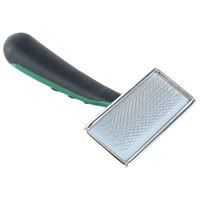
Our poor cat is going through her spring shedding season, so she is always itchy, and frequently vomiting. Mrs. Pim has taken to rubbing against us more than usual, and selecting even Mikko for her stropping target, when usually she stays a careful tail-grabbing-arm's length away. I've been trying to brush her more to get all the dead hair out and away from her GI tract.
Apparently, Mikko noticed. He has a new way of telling us that he wants something. It's a combination of a guttural whine and a lurch toward the object in question. It's not all that attractive a communication style, but I'm pleased that he's beginning his march toward speaking.
So he did the whine-lurch toward the brush, and I finished up a few swipes on our poor shedding cat, quickly cleaned out as many of the hairs as I could before the grunts escalated into screams, and handed off the brush to Mikko. (Yes, I usually find it easier to give in to exploration than to distract or discourage.)
I thought that's all he wanted, but instead of just sticking the juicy rubber handle into his mouth as he usually does (where squeak, squeak, squeak go his teeth), he immediately reached out and clumsily patted Mrs. Pim with it. Granted, he used the backside of the brush instead of the bristles, and he simultaneously used his other hand -- either to hold her in place or to clear off the fur as he sees me do, I'm not certain. The really incredible thing was that Mrs. Pim didn't take a swipe at him as she has recently been wont to do. She must really be itchy!
She kept circling around, and Mikko kept butt scootching after. He began to look exhausted but remained determined. It's hard to bum scootch and keep up with a cat! (He really should learn from her about crawling on all fours!) Anytime she was in range, he reached out with his two-handed brush/finger combo, and didn't even yank her fur.
It made me think of this section from The Continuum Concept, which captured my interest in particular as we run a home business and have dreams of Mikko entering into it with us one day (one day soon!):
"I was present at the first moments of one little girl's working life. She was about two years old. I had seen her with the women and girls, playing as they grated manioc into a trough. Now she was taking a piece of manioc from the pile and rubbing in against the grater of a girl near her. The chunk was too big; she dropped it several times trying to draw it across the rough boards. An affectionate smile and a smaller piece of manioc came from her neighbor, and her mother, ready for the inevitable impulse to show itself, handed her a tiny grating board of her own. The little girl had seen the women grating as long as she could remember and immediately rubbed the nubbin up and down her board like the others.
She lost interest in less than a minute and ran off, leaving her little grater in the trough and no noticeable inroads on the manioc. No one made her feel her gesture was funny or a 'surprise'; the women did, indeed, expect it sooner or later, as they are all familiar with the fact that children do join in the culture, though their approach and pace are dictated by individual forces within themselves. That the end result will be social, cooperative, and entirely voluntary is not in question." (p. 83 in my copy)
When Mikko started brushing Mrs. Pim, this little grater girl leapt to mind, and I tried so hard not to act surprised -- and soon gave up in glee. I just thought it was so dang cute! I called Sam over to watch and kept exclaiming, "See, he's doing it again!" So, yes, I failed at being a tribal continuum mama, but the wonderful thing is my baby is being a perfectly successful continuum baby!
I've been thinking of this whole issue of innate sociality/innate cooperativeness as I have had several recent conversations with teachers and parents about "setting limits" and not letting children walk all over you and how discipline needs to begin early.
It all can be summed up under the heading: "Assume the worst."
Here the quote above continues:
"That the end result will be social, cooperative, and entirely voluntary is not in question.
[...] Above all, the child's persona is respected as a good thing in all respects. There is no concept of a 'bad child,' nor, conversely, any distinction made about 'good children.' It is assumed that the child is social, not antisocial, in his motives. What he does is accepted as the act of an innately 'right' creature.
[...] The assumption of innate sociality is at direct odds with the fairly universal civilized belief that a child's impulses need to be curbed in order to make him social."
I have a lot more to say about this subject, but I'll leave it at the cat-brushing story for now. I'll just say outright that my parenting goal is to assume the best instead. It makes life so much more pleasant, even if it does still surprise cynical me when it works.
My 11-month-old has seen me brush the cat a handful of times in his short life, and already he wants to do the same. The tendency is to fit in, as I mentioned already. And even our cat thinks that's a good thing.
I've been thinking recently about how we respond to group situations. It came to mind because I was remembering how when Mikko was 5 weeks old, we took him on a sailboat ride that had me seriously fearing we would fall into the bay. The boat was tipped at a 40-degree angle at least, we weren't wearing life jackets, I was holding a fifteen-pound weight, I had no hands free to hold on to a line, and then Mikko wanted to nurse! I braced myself as best I could with my feet and just hoped I didn't kill myself or my new baby. I kept looking around at the other 20 passengers and the 2 men of the crew and marveling that they didn't look like they were just this side of death. I was not at all certain I wouldn't fall into the water.
I was repondering this event and musing that I might have said something to the crew about how scared I was if I had been the only passenger or one of only a few. I might have requested a life jacket or asked for a suggestion for a better seat -- on the way back, our backs were leaning against the hull since the boat was now tipped the other way, and that felt very cozy, looking up at the sky, as opposed to leaning forward staring down into the waves.
It reminded me of that oft-told story of the woman who was stabbed in a hallway and a dozen witnesses over the half hour did nothing or little to stop it. It's told in terms of bystander apathy or diffused responsibility, where at a certain critical group size, no one in the group will take responsibility for a situation. Everyone looks to the others for cues about how to act, and even if that is inaction, that's what the group will do.
Here's a quote about the effect from wikipedia:
"A common explanation of this phenomenon is that, with others present, observers all assume that someone else is going to intervene and so they each individually refrain from doing so and feel less responsible. ... People may also assume that other bystanders may be more qualified to help, such as being a doctor or police officer, and their intervention would thus be unneeded. People may also fear losing face in front of the other bystanders, being superseded by a superior helper, or offering unwanted assistance. Another explanation is that bystanders monitor the reactions of other people in an emergency situation to see if others think that it is necessary to intervene. Since others are doing exactly the same, everyone concludes from the inaction of others that other people do not think that help is needed. ... An alternative to explanations of rational motivation is that emotional cues to action can be as powerful as irrational ones, and the presence of a group of inactive others is a pre-rational emotional cue to inaction that must be overcome."
I think the lines "People may also fear losing face in front of the other bystanders," and "the presence of a group of inactive others is a pre-rational emotional cue to inaction that must be overcome," explain perfectly my reaction on the sailboat. Thinking of it now, I wonder why I didn't put my and my baby's safety over my trying to fit into a crowd -- but fitting into a crowd is a powerful motivator.
The better side of this picture is that there's a good spin to put on the same issue. This is what Jean Liedloff means when she writes in The Continuum Concept about humans being "innately social." We want to cooperate with our group; we want to fit in with those around us.
That's why it's unnecessary to "teach" babies to share or talk or eat food instead of poop or whatever it is -- they pick up these cues naturally, and some things take longer than others to sink in and some depend on physical and mental readiness, but usually a relaxed approach to educating babies works as well or better than an intensive campaign to "train" them. The natural method is not a hands-off approach -- in fact, it's very hands-on, a modeling for and a communication with the child, but it's much less stressful to expect that a child wants to and will learn what you and your tribe do.
Whenever I read comments like, "If you don't teach him how to use a regular cup now, he'll always be using a sippy cup" (often from child-development experts as well as other parents), I snicker at the image of a 50-year-old sighing at a restaurant and resignedly asking the waiter for his water to be poured into a sippy cup instead: "My mother just never taught me how to drink from one of these regular glasses." There's a lot of advice to consciously encourage babies to crawl, or walk, or speak, all operating under the ludicrously false assumption that children don't want to do these things and perversely will not unless coerced.
I always wonder if these concerned parents and pediatricians and psychologists think we should use flash cards to teach our babies to say "mama" or PowerPoint to present the fundamentals of crawling. Maybe some sort of workshop on clapping or a lecture on blowing spit bubbles?
The motivation to be just like those around us is powerful. As parents our biggest role is just to continue being human and expect our children to grow up in the way they were going to in the first place.
I'm Lauren Wayne, writer and natural parent. I embrace attached parenting with an emphasis toward green living.
Riding the rails with my husband, Crackerdog Sam, and our hobo kids, Mikko Lint Picker (born June 2007), Alrik Irontrousers (born May 2011), and Karsten (born October 2014). Trying every day to parent intentionally and with grace.


 Here are a few resources to get you started:


(for you to watch, not necessarily your baby under the age of 2 -- yes, they're geared toward kids, but that makes it easy for grown-ups to learn from them!)


 to dedicate to the task, but it bears passing on for those like us who appreciate variety in our baby food jars but find that having more than one opened at a time just means that more than one will spoil in short order.
 will do, but wouldn't a rubber ducky one be awesome?


 hand pump would be up for the job, because I didn't want to rent or buy anything fancier (it was up to me, she said, but she could finance only the storage bags). I wondered if I'd have to make the long drive myself to drop off the milk (no, she'd come to me). I questioned how much time it would take me to pump, and how much she was relying on me. Working from home and having no desire to train Mikko to take expressed milk, I had no call to pump for my own needs. Fortunately, she reassured me that she was collecting from a number of donors, including some from out of state who shipped to her, and she supplemented with formula as needed. She was just that committed to having the right food for her daughter.


 After while, though, the shine on my altruisum began to wear off. As it turned out, despite some pleasant emails and an invitation to a party, I didn't feel overly connected to the family on the receiving end of my milk. It felt more like a secret transaction -- "Leave the cooler on the porch, and don't ask any questions." The mother actually didn't enjoy the long drive out to get the milk, so we had to rope my sister-in-law into acting as a middleman, a role she wasn't enthused about, since she rightly saw that it was inconveniencing everyone involved. I never did get paid back for those freezer bags, either, so I was out a bulk supply of



 I'm Lauren Wayne, writer and natural parent. I embrace attached parenting with an emphasis toward green living.


